
When Projections Become Facts: Two Old Geezers Examine the 20,000 A&E Claim
The make-believe world of government press releases


As Tom, the old geezer, was nodding off, his sidekick nudged him awake.
“Hey, have you seen this?”
Carl was pointing to what might be a premier example of bad writing, poor supervision, or perhaps the government’s irresistible compulsion to churn out feel-good stories for an increasingly unruly populace:

Wow, Tom thought, at last: HMG action and a sizeable reduction in queues, waiting lists, and perhaps patients languishing on the floors of A&E departments. Maybe the angels are singing, and it’s a new dawn for all of us.
Too good to be true? It is, just scroll down a couple of inches, and the story begins to unravel:
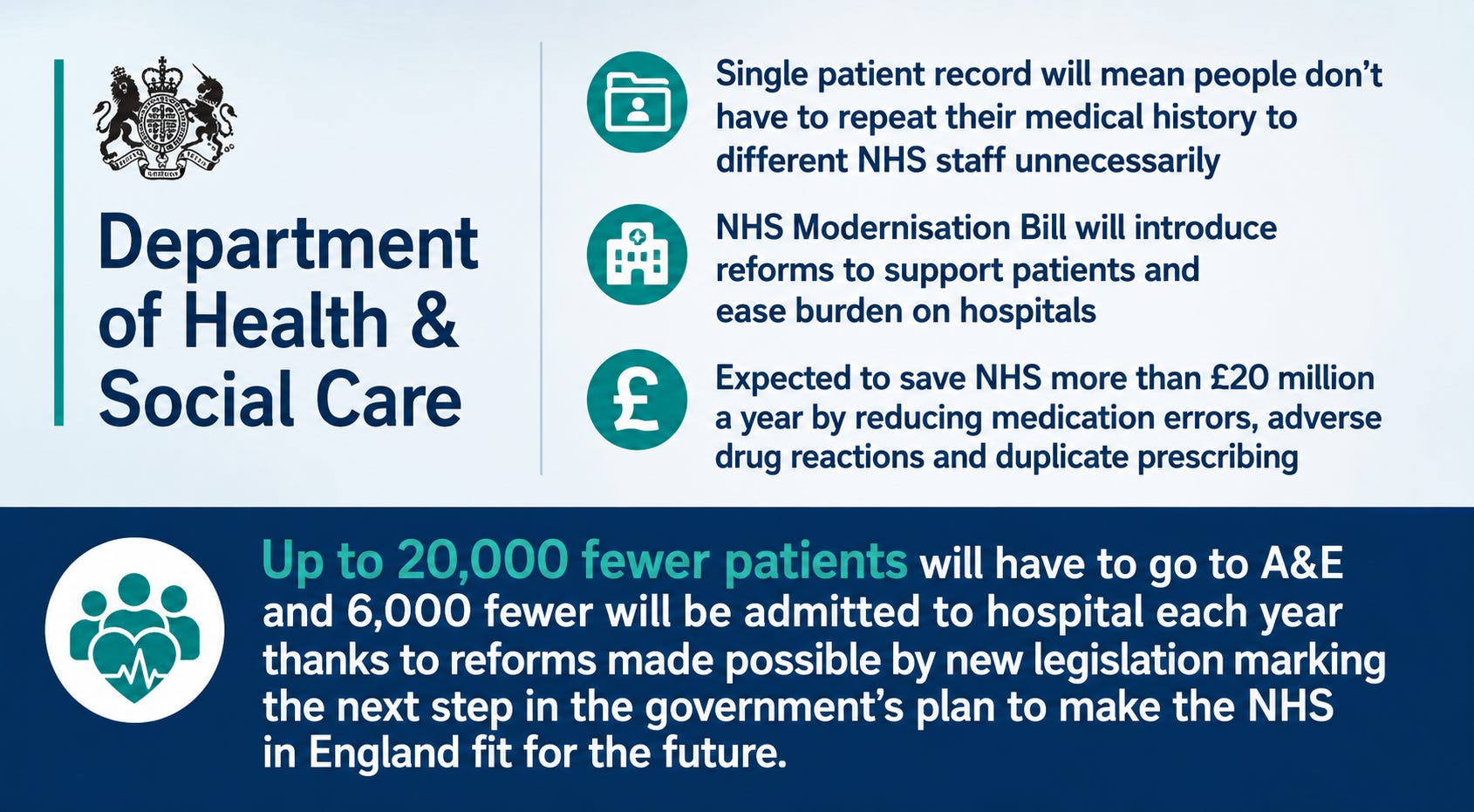
“Will?” spluttered Tom. “What do you mean, will? That’s future tense. Have I misread the headline?”
The release also promises ‘20,000 fewer A&E visits a year thanks to single patient record’—which sounded very much like an achievement already delivered.
Yet a few inches further down the page, the story shifts from accomplished fact to future aspiration. The benefits, it turned out, were not reducing A&E attendances; they would reduce A&E attendances, at some unspecified point in the future.
“Will”, “”will”, and “expected” are words associated with aspirations, projections, and hoped-for benefits—not established facts. Yet once again, the Government presents possibilities and promises as though they have already been achieved. And where, exactly, does the figure of 20,000 come from? Is it evidence-based, modelled, guessed, or simply plucked from the air?
Well-designed, clinically supported digital pathways may reduce avoidable emergency use in selected populations, especially when they include remote monitoring, rapid clinician response, self-management support, and access to same-day alternatives.
However, for generic online GP forms, symptom checkers, or digital-first access, the evidence for reducing A&E is weak or uncertain, and some systems may shift demand, increase caution, or create safety/access issues rather than reduce attendances.
To investigate this claim, we carried out a limited review of the available evidence (see references below).
